AI Digital Marketing Course
Check out our modules, batch schedules, syllabus brochures and certification options.
View course detailsTable of Contents
How do you become a digital marketer?
To become a digital marketer, learn the fundamentals, set up a practice website, master the core channels — SEO, content, Google and Meta Ads and analytics — get hands-on with AI tools, specialise in one area, then build a portfolio of real results and apply for a role or start freelancing. You do not need a degree or coding; with consistent practice, most people reach a job-ready level in three to six months.
Digital marketing is one of the most accessible high-growth careers in 2026 — companies hire on proof of skill, not diplomas. This guide lays out the exact step-by-step roadmap, the skills and tools you need, how long it takes, how to build the portfolio that gets you hired, and the common mistakes to avoid — followed by 50 direct answers to the questions beginners ask most.
At a glance
| Factor | Detail |
|---|---|
| Time to job-ready | 3–6 months with consistent practice |
| Prerequisites | None — no degree or coding required |
| Best starting point | Fundamentals + a practice website to test on |
| First role | Digital Marketing Executive / SEO or Social Executive |
| Fresher pay (India) | ₹2.5–6 LPA (indicative, mid-2026) |
| Key to getting hired | A portfolio of real, documented project results |
| The 2026 edge | AI fluency — use AI to augment, never replace, your work |
Step-by-step roadmap
Nine steps, in the order that actually works. Learning these out of sequence — jumping to ads before fundamentals, or SEO without a site to practise on — is what slows most beginners down.
| Step | What to do | Outcome |
|---|---|---|
| 1 | Learn the fundamentals | How the funnel and channels work, the customer journey, marketing psychology, 4Ps and KPIs — so you understand the system before the tools. |
| 2 | Set up a practice website | Buy a domain, install WordPress, publish a few posts. This site becomes your personal laboratory to test every skill you learn. |
| 3 | Master SEO | Keyword research, search intent, on-page, technical and off-page SEO — plus how AI search (AEO/GEO) works in 2026. |
| 4 | Learn content & copywriting | Content strategy, blogs, creatives and persuasive copy — using AI to draft faster while keeping the voice human. |
| 5 | Run paid ads | Set up real Google Ads and Meta Ads campaigns; learn audiences, budgets, the pixel and bidding. |
| 6 | Learn analytics (GA4) | Track events, build dashboards and read data — the skill that lets you prove results and command higher pay. |
| 7 | Master AI tools | ChatGPT, Canva AI and research tools for content, ads and analysis — your speed and competitive edge. |
| 8 | Specialise (go T-shaped) | Pick one area to go deep — SEO, performance marketing, social or analytics — to stand out and earn more. |
| 9 | Build a portfolio & get hired | Document campaign results, build a portfolio, then apply for roles, take an internship, or start freelancing. |
Walkthrough of the steps
1–2 · Fundamentals and a practice website
Before tools, understand digital marketing as a system: how SEO, content, paid ads, social and email work together to move someone from stranger to customer, and the psychology behind why people click and buy. Then create a simple WordPress site — buy a domain, install WordPress, publish a few posts. Don't worry about traffic; this site is your personal laboratory, the place you'll test every skill that follows. Having something real to practise on is the single biggest accelerator for beginners.
3–6 · The core channels
Now build the skills employers pay for, in order. Start with SEO — keyword research, search intent, on-page and technical basics — because it underpins everything and teaches you how content ranks (including in AI search). Add content and copywriting, then move to paid ads, setting up real Google Ads and Meta Ads campaigns so you understand audiences, budgets and the pixel. Then learn analytics with GA4: tracking, dashboards and reading data. Analytics is the step most beginners skip and later regret — the ability to prove results is what separates employable marketers from the rest and unlocks higher pay.
7–9 · AI, specialisation and getting hired
Weave AI through everything — use ChatGPT, Canva AI and research tools to work faster on content, ad copy and analysis, but treat AI as an assistant that augments your judgement, never a replacement for it. A marketer who ignores AI in 2026 is at a real disadvantage; one who masters it has an edge. Once you grasp the whole funnel, specialise in one high-value area (SEO, performance marketing, social or analytics) to become “T-shaped” — broad knowledge, deep expertise — which stands out and pays more. Finally, turn your projects into a portfolio of documented results and start applying for roles, internships or freelance clients.
Skills you need
A mix of technical and creative skills, built step by step. You don't need them all on day one — the roadmap above adds them in sequence.
| Skill area | What it covers |
|---|---|
| Marketing fundamentals | Funnel, customer journey, psychology, positioning, KPIs |
| SEO & AEO/GEO | Keyword research, on-page/technical SEO, AI-search optimisation |
| Content & copywriting | Content strategy, blogs, creatives, persuasive copy |
| Paid advertising | Google Ads & Meta Ads — audiences, budgets, bidding |
| Social media | Organic strategy across Instagram, LinkedIn, YouTube, X |
| Analytics | GA4, Google Tag Manager, dashboards, reporting |
| AI tools | ChatGPT, Canva AI, prompt basics — augmentation, not replacement |
| Soft skills | Communication, creativity, analytical thinking, consistency |
Do you need a degree or coding?
No to both. There is no degree requirement to become a digital marketer — companies care about results, not titles — and it is one of the easiest fields to enter without one. Nor do you need to code; digital marketing uses no-code tools, platforms and AI assistants, and at most you might ask an AI tool to generate a simple HTML snippet. What you do need is curiosity, consistency, and a willingness to keep learning, because the field changes quickly. Transferable skills from any background — writing, design, sales, analysis — give you a head start.
How long does it take?
With consistent, focused practice, most learners reach a job-ready level in three to six months, and intensive structured tracks can be faster. The technical skills can be acquired in weeks; the marketing sense — strategy, judgement, client communication — keeps developing on the job. Treat becoming a digital marketer as a continuous process rather than a one-time finish line: the best marketers never stop being students, because the landscape shifts with new tools, AI and platform changes.
A realistic pace looks like this: spend your first month on fundamentals and a practice website; the next two to three months building the core channels one at a time, applying each to your own site; and the following months layering AI tools, choosing a specialisation, and assembling your portfolio. The single biggest variable is not talent but consistency — a focused hour or two each day, applied to real projects, compounds far faster than occasional marathon sessions. People who follow a structured roadmap and document everything as they go almost always get there quicker than those who jump between random tutorials.
Build a portfolio
Knowledge alone does not get you hired — proof does. Your portfolio is that proof: an SEO project on your own site, a small Google or Meta Ads campaign with results, content pieces, and an analytics dashboard, each showing the goal, what you did, and the measurable outcome. You do not need paying clients to start — your practice website, a small ad budget, a local business or NGO you help for free, and course live projects all produce real, documented results.
When you can show three live brands, a managed ad budget, and measurable CTR or conversion improvements, you out-compete candidates who only list course names. This is why the Course Unbox programme is built around live projects and a capstone.
Get certified (honestly)
Certifications help — especially for freshers, where they validate skills and can open the first door — but they are not the main driver of getting hired; a portfolio of real results matters more. Useful, mostly free certifications include Google Ads and Google Analytics (via Google Skillshop), HubSpot and SEMrush; Meta Blueprint is a paid option. These are issued by the platforms themselves, not by any training institute. A good course prepares you for them and adds the real-world projects that certificates alone can't.
Get your first job or freelance
With a portfolio in hand, you have two routes, and many people do both. For a job, write a resume that quantifies your projects (“grew organic engagement 40% in three months”, not “managed social media”), build an active LinkedIn presence sharing your work, and apply for entry-level roles like Digital Marketing Executive or SEO/Social Executive, plus internships. For freelancing, start with small SEO, social or ad-management projects — accessible once you have a portfolio — and grow your client base over time. Course Unbox supports the job route with interview preparation and placement assistance, and teaches the freelancing route in a dedicated module.
Common mistakes to avoid
- Trying to learn everything at once instead of one skill at a time.
- Skipping the fundamentals and rushing straight into running ads.
- Learning SEO without building a website to practise on.
- Focusing only on certificates instead of real, documented projects.
- Chasing every new AI tool without understanding marketing basics.
- Ignoring analytics — then being unable to prove any results.
- Trying to master every social platform at once.
- Publishing content without doing keyword research first.
A structured roadmap — the right skills in the right order, with feedback — prevents almost all of these.
Self-study vs a structured course
Both can work; the difference is speed and reliability. Self-teaching is possible but slow and easy to get lost in scattered, outdated tutorials with no feedback. A structured course teaches skills in the correct order, gives mentorship, and builds a portfolio through live projects — the fastest way to bridge the gap.
| Factor | Structured course | Pure self-study |
|---|---|---|
| Structure & sequence | Skills taught in the right order | Easy to learn out of order and get lost |
| Speed to job-ready | Faster — weeks/months, guided | Slower — scattered, trial and error |
| Feedback & mentorship | Live doubt-clearing and reviews | None — you self-assess |
| Live projects | Real campaigns built in | You must create your own |
| Portfolio | Guided portfolio of real work | Possible, but unstructured |
| Cost | Course fee (from ₹75,000, EMI) | Mostly free, but costs you time |
How Course Unbox helps you
- Teaches the full roadmap in the right order — from fundamentals through SEO, ads, analytics and AI tools, the exact sequence above, so you don't get lost or skip the steps that matter.
- AI-first for 2026 — AI tools and AI-search (AEO/GEO) run through every module, so you learn marketing the way it is actually practised now and gain the competitive edge AI fluency brings.
- Project-based — you graduate with a portfolio — live campaigns and a capstone project mean you finish with documented, real-world results to show employers and clients.
- Founder-led mentoring — learn from Jugal Chauhan (11+ years, 40,000+ learners trained) and the mentor team, practitioners who run real campaigns.
- Honest support — genuine placement assistance and interview prep; no guaranteed-job promises, no inflated claims. Your results and effort drive your outcome.
Start your journey
Ready to begin the roadmap with guidance? Course Unbox teaches it AI-first, online and offline, from ₹75,000 with EMI. Visit Basement 1, Sandesh Tower, C-56/31, Sector 62, Noida 201309, or call / WhatsApp +91-8923660886 for the syllabus, batches and a demo class.
Related resources
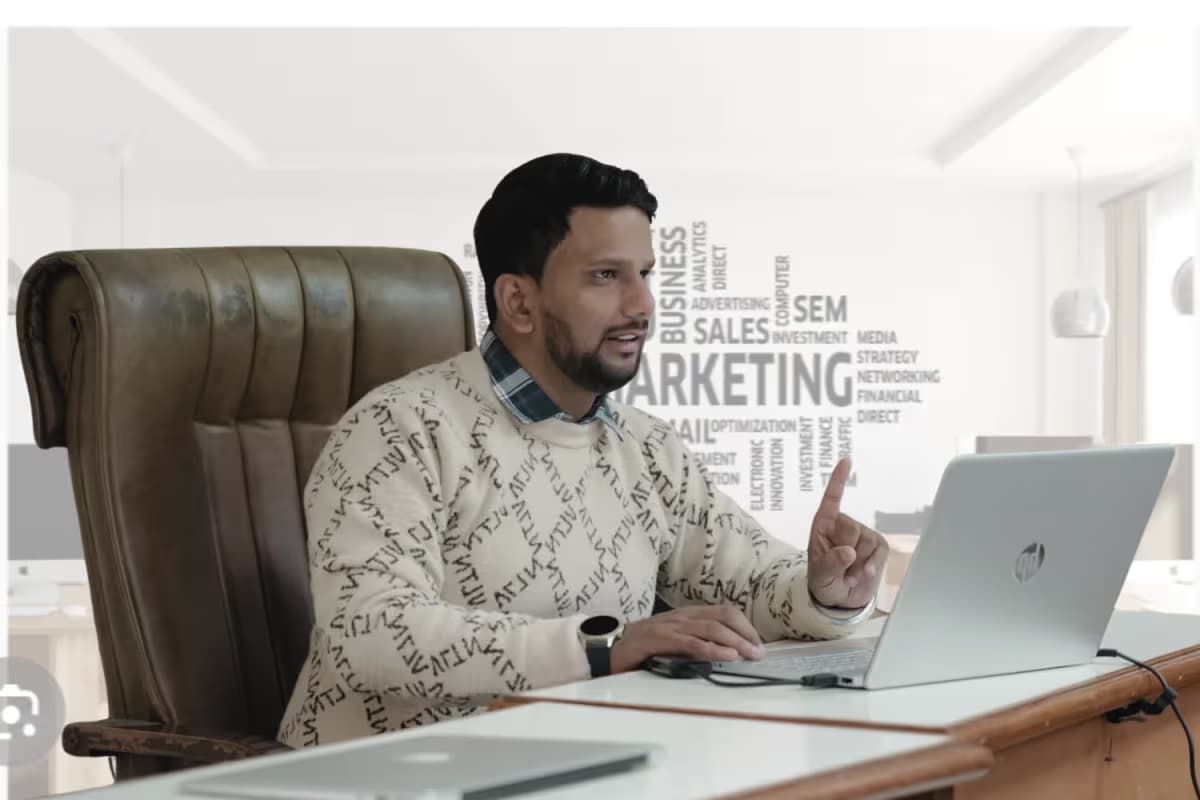
About the author
Jugal Chauhan
Founder, Course Unbox
Jugal Chauhan is the founder of Course Unbox and a digital marketing and SEO practitioner with 12+ years of experience. He has driven growth for brands like Bata India and Airtel and led teams at leading edtech companies, and now teaches SEO and digital marketing to thousands of learners through live, project based cohorts.